Art and Design

Art Curriculum Statement
Art should enable the children to communicate what they see, feel and think. Children should
experiment with their ideas, their use of colour, texture, form, pattern and different materials
and processes. Self-evaluation of work is encouraged, and children are taught how to be
resilient to achieve their goals.
Intent
We want Art to allow the child to develop their imagination and creativity, to make connections through their inventive minds and give them the skills to record their imagination and ideas.
At Place Farm, we give the children the opportunity to be creators. Children value their work and always have high expectations in the process of their work, as well as the outcome.
Children are able to experiment with a range of resources and materials and are encouraged to learn different skills and techniques. We encourage them to be proud of what they achieve and what they learn. We want our pupils to be aware of different artists and know that it’s good to have unique and individual styles.
Implement
Art starts in our EYFS unit, where the children experiment with colour, textures and materials.
Different opportunities are available to the children daily. Children can work on their own ideas and select their own resources. They are encouraged to think about what they are making and use tools in a safe way. The children then build on these skills as they progress though the school. The children study different artists and their styles. They learn how to add detail to their drawing, use different resources to create texture and print as well as using tools to carve and create and add pattern to sculpture.
We hold an ‘Art Exhibition’ for all of our families to attend which will allow our pupils from Years One to Six showcase their work. This will ensure children have the time to share their work and talk about what skills and techniques they have gained and used.
Impact
What we want the children to achieve by the time they leave Place Farm:
- That everyone can progress and develop their artistic flair and skills
- That anyone can be a creator
- That being a good artist is part of the process and not always the end outcome
- That they are proud of what they achieve
- That they feel supported and secure in making mistakes
CUSP Art and Design
Curriculum Context
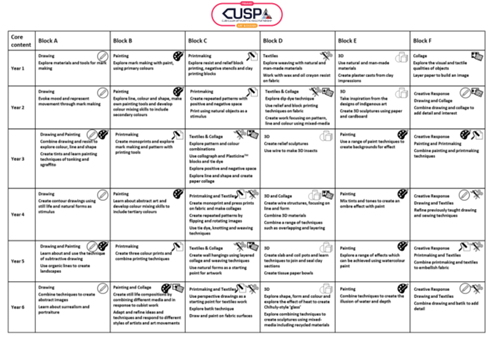
In addition to the core knowledge required to be successful within each discipline, the curriculum outlines key aspects of artistic development in the Working Artistically section. If you would like further information about the progression of skills in other areas of our art curriculum, please contact the Art Subject Leader.
Teaching and Learning
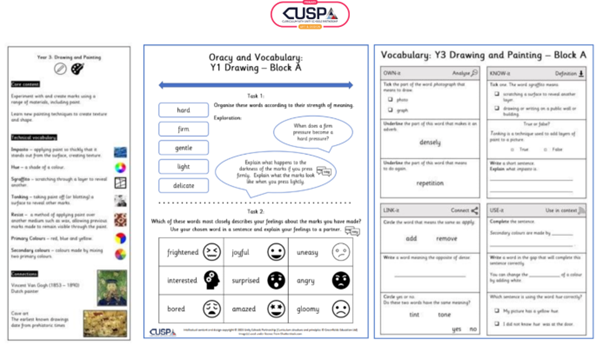
Vocabulary is the golden thread that sits at the heart of the CUSP Curriculum, mapped out from the EYFS to Year 6 within and across subjects.
CUSP Art and Design resources contain a wealth of evidence-led materials to support excellent teaching and long-term learning.
How the Subject Leader monitors and evaluates the curriculum
We use Pupil Book Study (Alex Bedford, published by John Catt) to evaluate the impact of the curriculum on the lived experience of pupils.